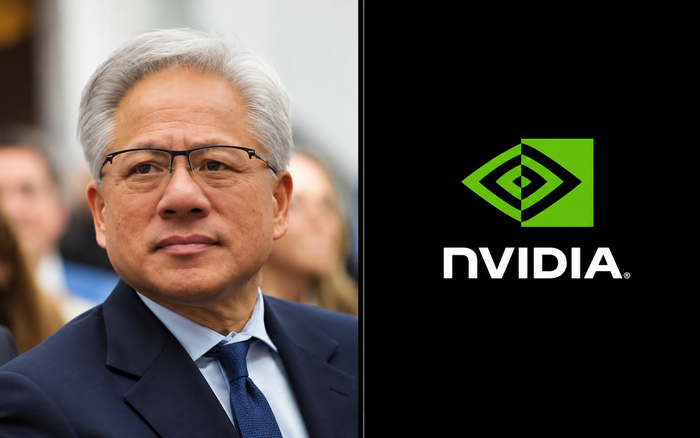
Ông Jensen Huang từ chức CEO NVIDIA
view more
India, Guatemala highlight coffee for global consumers at Seoul cafe show
view more
Luxury van market heats up in Korea as Mercedes-Benz joins rivalry with V-Class
view more
Deutsche Bank urges Korean financial markets to match its companies' global reach
view more
Gov't to curb incumbents' influence over CEO selection process in sweeping corporate governance overhaul
view more
Ramyeon exports set to rise 30% in 2027 on expanded production: sources
view more


YOUR NEWS, OUR NETWORK.
Do you have Great News you want to tell the world?
Be it updates about your business or your community, you can make sure that it’s heard by submitting your story to our network reaching hundreds of news sites across 6 verticals.

Jensen Huang's potential exit casts shadow over Korea's AI road map
Mounting uncertainties surrounding Nvidia are threatening to disrupt Korea's semiconductor industry and its broader artificial intelligence (AI) road maps, as U.S. semiconductor restrictions are likely to be tightened and the future of its beleaguered CEO Jensen Huang is unclear. Following Huang's admission of an affair with a suspected Chinese spy, U.S. lawmakers have stepped up calls for tighter restrictions on China's access to U.S.-made AI chips. Senate Democratic Leader Chuck Schumer on Tuesday (local time) called on Congress to pass three acts tightening export controls on advanced AI chips. “This alarming situation makes clear that Congress must now act to pass critical bipartisan legislation like the AI Overwatch Act, the MATCH Act and Chip Security Act to cut off China's access to advanced American technology before it's too late," Schumer said during a Senate floor speech. The AI Overwatch Act is aimed at allowing Congress to block advanced AI chip exports to U.S. foreign adversaries. The Chip Security Act will require AI chips subject to export controls to have a “location

Can tougher reappointment rules curb power of Korea's bank holding company chiefs?
A corporate governance reform package unveiled by the government to boost transparency of CEO succession at financial companies and rein in long-serving chairmen is facing questions over whether it can deliver meaningful change, according to experts Thursday. Their skepticism centers on whether tougher voting requirements will make a difference when incumbent chairmen already enjoy overwhelming shareholder support, and whether independent directors will be able to challenge management in practice. The announcement comes nearly a year after President Lee Jae Myung publicly criticized what he called a “corrupt inner circle” in which a small group of executives takes turns retaining control of financial firms. A central aim of the reform is to curb incumbent CEOs’ influence over the selection of their successors. Under the proposed rules, committees responsible for nominating CEO candidates would consist entirely of independent directors. The package also seeks to make repeated reappointments harder at bank holding companies such as KB, Shinhan and Hana. CEO nominations would require a

City-backed startup summit bolsters Seoul's drive to be global innovation hub
Seoul’s annual startup summit, Try Everything 2026, generated more than 2,000 investment reviews and doubled face-to-face investor meetings, bolstering the city’s ambitions to rank among the world's top startup hubs. The two-day global startup festival, held Sept. 9-10 at Dongdaemun Design Plaza (DDP), attracted 8,025 participants, including 1,457 visitors from 67 countries, and featured 912 startups, the Seoul Metropolitan Government said Thursday. The number of participants increased 3.8 percent from 7,729 last year, while startup participation rose 4.2 percent from 875 companies. The event recorded 1,141 one-on-one meetings between startups, investors and major corporations, more than twice the 541 meetings held last year. The amount of potential investment under review reached 202.4 billion won ($140 million), up approximately 12 percent from 2025. Organizers expanded dedicated meeting booths from 15 to 40 and strengthened advance matchmaking to encourage substantive discussions and business partnerships. Held under the theme "AI Changes Everything. Now Try Everything," this year's

KOGAS Q3 net more than triples on equity gains, lower costs
Korea Gas Corp. (KOGAS), Korea's state-run gas utility, said Thursday its third-quarter net profit more than tripled from a year earlier, driven by increased gains from equity investments and lower interest costs. Net profit for the three months ended in September jumped to 272.4 billion won ($204.6 million) from 86.8 billion won in the same period last year, the company said in a press release. "Gains from investments in affiliated companies and lower interest costs on outstanding loans boosted our quarterly bottom line," a company spokesperson said. Operating profit rose 51.1 percent to 587.8 billion won in the third quarter from 388.99 billion won a year ago. Sales climbed 17.8 percent to 7.5 trillion won from 6.37 trillion won. The company attributed its improved operating performance to increased earnings from a liquefied natural gas (LNG) project in Canada, in which KOGAS holds a stake, and a gas exploration project in Mozambique. For the first nine months of the year, net profit more than doubled to 1.16 trillion won from 539.09 billion won in the year-ago period. Operating profit r

Samsung, SK hynix tighten security training amid industrial espionage concerns
Major tech-intensive firms here are stepping up internal security training and vigilance against industrial espionage, after Nvidia CEO Jensen Huang made headlines for his reported affair with Alice Huang, who is suspected of being linked to Chinese intelligence. The allegations have heightened concerns among technology companies that personal relationships and social interactions could be exploited to compromise sensitive corporate information. Major U.S. technology companies, including OpenAI, have also been strengthening counterintelligence training for employees. Some companies have reportedly advised workers to take precautions in their daily lives, including avoiding wearing clothing with company logos outside the workplace. The heightened vigilance is also spreading among Korean semiconductor companies, which handle highly sensitive technologies and intellectual property. Samsung Electronics and SK hynix have been strengthening security education for employees, as the importance of advanced semiconductor technologies grows. Samsung Electronics’ Device Solutions (DS) division desi

Nvidia CEO Jensen Huang to step down in big blow to AI boom
Nvidia CEO Jensen Huang is stepping down, leaving the artificial intelligence (AI) industry without its biggest champion and clouding the future of the chipmaker he built into an AI powerhouse. Chief Financial Officer Colette Kress will take over as interim CEO as Nvidia looks for a permanent successor, the company said on Thursday. It named former Synopysys CEO and board member Harvey Jones as its first-ever board chairman. Huang, who co-founded Nvidia and is its fourth-largest investor with a stake of about 3.61 percent, will exit the board as well. Nvidia shares fell more than 10% in premarket trading, and weighed on the broader market. Pressure had been mounting on Huang in recent days after reports said the 63-year-old, who is married, had an affair with a Chinese businesswoman who US authorities suspect of spying for Beijing. Nvidia's board met on Wednesday to consider his ouster, a person familiar with the matter said, after reports earlier in the day that Huang also had an extramarital affair with a senior company executive who reported to him. Huang's exit plunges the $4 trillion